
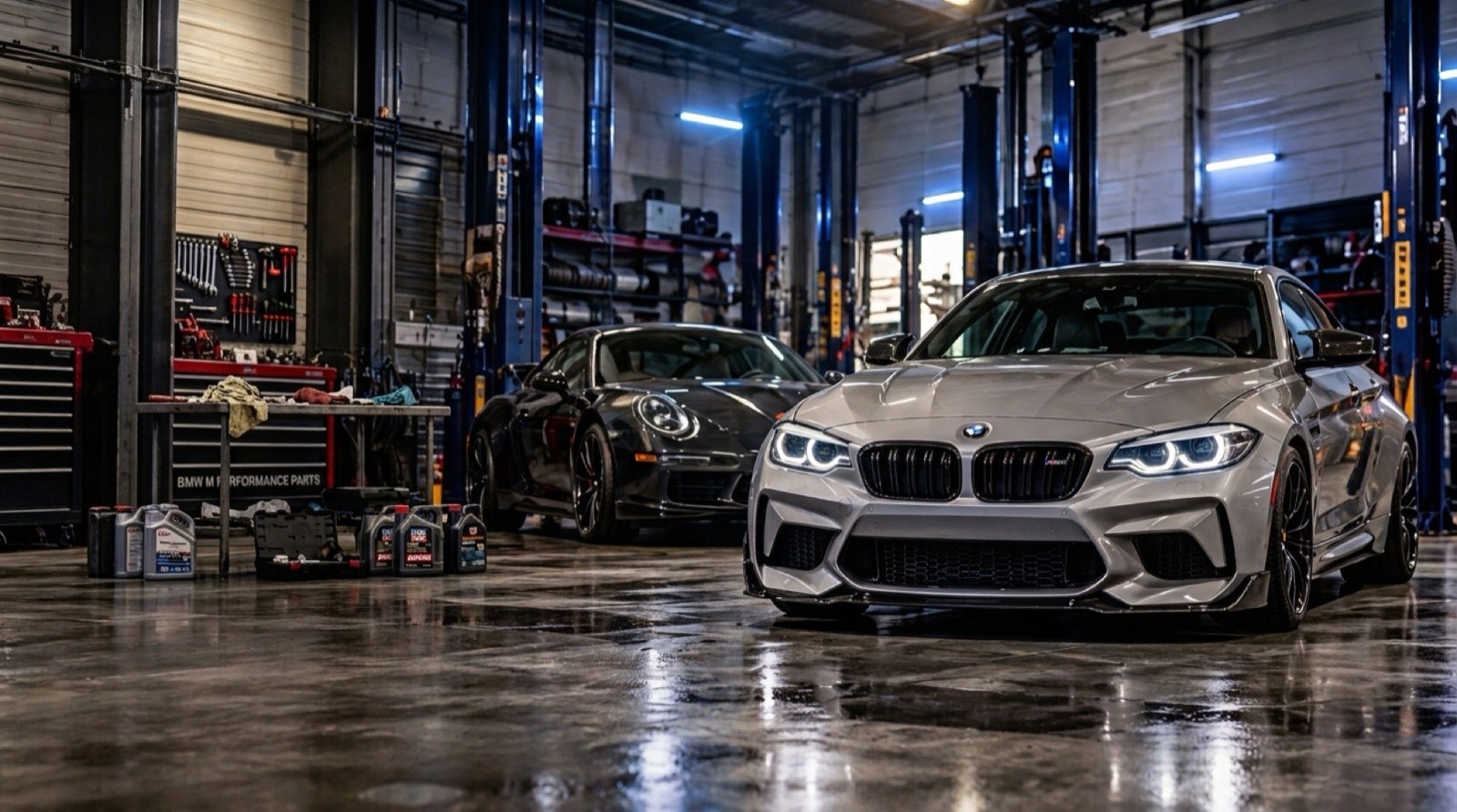
Stage 2. Matched to your parts.
A calibration built around the supporting hardware already fitted to your car.
Typical Stage 2 hardware.
Which parts apply depends on the platform. These are common examples of supporting upgrades a Stage 2 calibration is matched to.
- Air
Intake and airbox
Higher-flow intake components change how air reaches the engine. The calibration has to account for what is fitted.
- Exhaust
Downpipe and exhaust
A less restrictive exhaust changes back-pressure and, on turbocharged cars, how the turbocharger behaves.
- Cooling
Intercooler and cooling
Better charge-air cooling keeps intake temperatures steadier, which we want to know about before calibrating.
- Supporting
Fuel and sensors
Some platforms also need supporting fuel or sensor changes. We tell you what is sensible for your engine before you spend money.
What Stage 2 means.
Stage 2 sits between a stock-hardware calibration and a full build. Your car already has supporting hardware, and the calibration is matched to it so the parts and the software work together as one system.
The parts need to be fitted, checked and working before the calibration is written, because the software is built for what is actually on the car.
- Calibration matched to your parts
- Parts fitted and checked beforehand
- Parts list reviewed before we agree a plan
- Platform-specific approach
Before we start.
A little preparation up front makes the result better and the job smoother.
What we'll ask for
- A full list of fitted parts and brands
- Whether parts are new or used
- Any previous tune or software on the ECU
- Service history and any known faults
What we'll check
- Parts are fitted correctly and in good order
- Your ECU and software version are supported
- Whether an unlock is needed first
- Whether extra verification, such as dyno time, is worthwhile
Stage 1, 2 and 3.
A quick guide. We confirm the right stage for your vehicle before any work starts.
| Feature | Stage 1 | Stage 2 | Stage 3 |
|---|---|---|---|
| Hardware | Original hardware | Supporting parts fitted | Major hardware changes |
| Calibration | Matched to your stock vehicle | Matched to your parts | Developed around your build |
| Best for | Unmodified vehicles | Vehicles with bolt-on parts | Built or heavily modified vehicles |
| Planning | Standard review | Parts list reviewed | Detailed build planning |
| Extra checks | Not usually needed | May be recommended | Often recommended |
How a Stage 2 job runs.
-
01
Share your parts list
Tell us your vehicle, ECU and exactly what is fitted.
-
02
Confirm and plan
We check support, review the parts list and agree the plan and timing with you.
-
03
Read and back up
The original software is read and saved so there is always a known starting point.
-
04
Calibrate to your hardware
The calibration is prepared for the installed parts, and checksums are corrected when the data is written.
-
05
Verify and review
Where supported, datalogs show how the car responds, and we go through the result with you.
Backed by Dynotech
Verification where it makes sense.
For some builds, checking the result on a dyno is worth it. Where that applies, we can discuss dyno-supported verification with the Dynotech team in Seekonk, MA.
Good to know.
Which parts count as Stage 2 hardware?
It depends on the platform. Tell us what is fitted and we'll confirm whether Stage 2 is the right fit. Examples include intake, exhaust and cooling upgrades.
Do the parts need to be fitted first?
Yes. The calibration is built for the parts on the car, so they should be fitted and working before the software is written.
Do I need dyno time?
Not always. We advise based on your vehicle and setup once we've reviewed your parts list. Dyno-supported verification can be discussed with the Dynotech team where it makes sense.
Can I move up to Stage 3 later?
Yes. If you add major hardware later, the calibration can be revisited for the new setup.
Will my ECU need unlocking?
Possibly. Some ECUs have security that must be unlocked first, while others can be accessed through the OBD port. We confirm during the review.
Ready for Stage 2?
Find your vehicle, or send us the details and we'll confirm the next step.
Find your vehicle → Contact us →